Toothpaste on the clitoris

No matter how she tried, she couldn't shake that stuff off.

No matter how she tried, she couldn’t shake the damn stuff off.

I met a male-dom bdsm couple a few years ago. The woman had done something slightly wrong that day, and her Master told her he was going to apply a dab of toothpaste to her clitoris. 

The fact that I was there, having coffee with them, was part of the reason he chose that slightly out-of-the-way punishment. It was certainly the reason why he chose to announce it to her in front of a third party. Humiliation is a sweet sauce.

From the woman’s reaction – she got quite lively after he’d pronounced sentence, and then very quiet and submissive – it was clear that she found it quite a challenging form of punishment.

It was also clear that she loved it. Perhaps she liked it best after the first hour was over.

After about ten minutes, the man told me, it would burn like a mouthful of wasabi. She’d find it nearly impossible to keep still, for the next forty minutes. Which was why he would insist that she stood perfectly still, and punish her hard for any wriggling.

It’s hard to imagine being so busy that I’ve never got around to doing this myself, but that’s what’s happened. I’ve filed the idea away, and never had the time for it. But I’m going to do it next week. I’ll let you all know how it turns out.

Update: I keep my promises, really. Eventually. I’ll tell you about it in my post for 21 September 2014.

Note:

The report on my experiment is here.

Once more: the inter-gracile sub-pudendal fossa

Naming that sweet gap at the top of a woman’s thighs took us on a longish historical journey. Why do medical people call the outer genitals, especially of women, by a Latin word that means “shameful”?

University of Bologna, founded 1088.

University of Bologna, founded 1088.

The answer is that due to various historical accidents, the oldest universities of Europe were founded and controlled by men who didn’t like women, or their genitals, very much. And that’s where the study of anatomy resumed, after a hiatus of over 1,000 years.

Lightly spanked girl, with thigh gap.

Lightly spanked girl, with thigh gap.

But this post is purely about celebration. Isn’t the inter-gracile sub-pudendal fossa pretty?

It looks especially good on a girl who’s subject to discipline. The mix of disciplinary marks, and the softness and intimacy of that gap, is beautiful and inspiring.  


I like the combination of cane stripes and thigh gap. It makes it so very clear how best to deliver care and consolation after the caning.

I like the combination of cane stripes and thigh gap. It makes it so very clear how best to deliver care and consolation after the caning.

The “shameful” pudenda: there’s a shameful history behind the word

The Greek academies had collected a lot of medical and anatomical knowledge. They had the works of Galen, the Hippocratic writings, and above all they had the anatomical works of Herophilos, an early scientist in something like the modern sense, who performed and recorded dissections of human bodies and recorded his findings in considerable detail.

The academies were the  inheritors of the tradition of Plato, Aristotle and others, although the tradition was not continuous. It would be misleading to present them as purely scientific in the modern sense. Neo-Platonic doctrines were, on the whole, more mystical and dogmatic than scientific. However, free inquiry in philosophy and science was possible in the academies. Free inquiry was a dangerous thing under early Christian rule, and the academies were forcibly closed by the Christian Emperor Justinian in CE 529.

Not everything was lost, because the main Academy philosophers and scientists took asylum in Persia, under the protection of king Khosrau 1. At the time, Persia was a Zoroastrian country.

Shoot straighters, you bastards! Use bigger elephants! The fall of Persia to Arab Muslim forces, 633-644.

Shoot straighters, you bastards! Use bigger elephants! The fall of Persia to Arab Muslim forces, 633-644.

Some of the original group to travel to Persia ultimately returned to Greece. However, others remained, as did  their books, or copies of their books. When the Muslim Arab invasion of Persia began in CE 633, the academy’s successors had been based in Tehran for nearly 100 years.

(When the invasion was completed, in CE 644, the conquest of Persia complete, the Muslim conquerors of Persia found themselves in possession of scientific texts and knowledge which Christians under Justinian had deliberately tried to destroy.

This is the most important reason why Islamic countries were for a time ahead of Christian countries in medicine and other sciences. 

So this knowledge was lost to Europe. Meanwhile, the Zoroastrians of Persia, who had invited those philosophers to come with their books, began to be persecuted and killed by their Islamic conquerors. 

If I had a time machine, one of the things I’d do would be to go back to Persia in 633, and encourage Persia’s archers to shoot a little straighter and their other defenders to fight a little harder.

But the consequence in the West was that, with Christian Emperors having stamped out the long Greek tradition of free enquiry, the universities that were set up were Christian-controlled, and reflected Christian attitudes such as hostility to sex.

Therefore, genitals became “pudenda”, shameful parts. Modern anatomists, following their 15th century predecessors, still use the term.

A nice cunnus

The real topic is why modern anatomists still use “pudenda” to mean cunt. But this post strays off the path a bit.

The Oxford Shorter Dictionary claims that it isn’t clear that Latin “cunnus” is related to the English word “cunt”. Well, they’re the experts, but it seems pretty improbable that the Latin word “cunnus” and the Germanic “kunta” (the source of the English word) don’t have a common proto-Indo-European root.

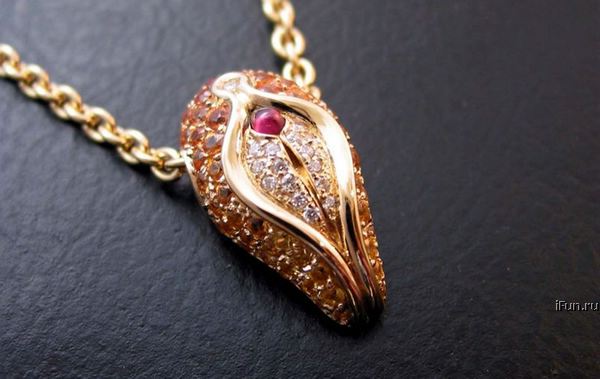
cunnusAnyway, I was looking for images to illustrate the word “cunnus”, and I found this piece of jewellery.

Pretty, isn’t it? I want one.   

Using the Latin word for “shameful” as the term for “cunt”: did the Romans do that for us?

There’s an idea that the Greeks and Romans were cheerful, sex-positive pagans, whose cultures recognised and celebrated the sexual being and power of women, and it was Christianity that came along and made everything maudlin, misogynist and miserable.

Orgy romanPeople seem to like the idea of lost paradises, like the matriarchal golden age, tragically overthrown by men, that many 1970s feminists believed in. The truth is that just as there never was a lost matriarchal paradise, there never was a jolly pagan past where people could and did have sex with who they wanted as they wanted, in orgy rooms packed with brilliantly sexy art.

The pre-Christian Greek and Rome cultures had their puritans and their women-haters too. The social position of women didn’t get any worse when Christians rose to political power.

But, having acknowledged all that, there are ways in which the pre-Christian Greeks and Romans are much to be preferred to their (as they became) Christian overloads. For one things, the Classical Romans never called cunt “shameful”. Their word was “cunnus”. “Pudenda” starts to appear, as a disparaging word for genitals, but especially for women’s genitals, after CE300. That is, after Christians had taken over the Empire.

Thigh gap: whassa “fossa”?

A “fossa”, in anatomy, is a gap, a hollow area or a depressed area.

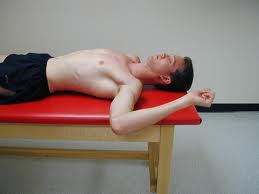
images-1A good example of a fossa is the axillary fossa, which is the indent in the body under the arm, running down the side of the body from the point where the arm joins the shoulder.

The man lying on his back on the bench is showing his axiliary fossa. It’s the hollow running down his side, starting from his armpit.

So those are the three elements to the thigh gap, in anatomese:

Photo Shop is my favourite store.

Ah, photoshop …

1   Inter-gracile

2   Sub-pudendal

3    Fossa.

Together they make up this.

Pudendal: it’s a shame

imagesThe reason I was looking round for an alternative to “pudendal” is that “pudendal” associates having genitals with being “shameful”. That is, it’s a word for “exterior genitals” derived from the Latin for “shameful”.

It’s surprising that modern anatomists still use the word. But they do.

The reason we have this word, in modern anatomy, is something I’ll talk about in a couple of later posts. 

"St Jerome", by Leonello Spada. Jerome really, really hated women. But he especially hated cunt. Pity.

“St Jerome”, by Leonello Spada. Jerome really, really hated women. But he especially hated their cunts. 

In the meantime, I’m going to use the standard anatomical term, “sub-pudendal”. Because if you do pay attention to the origin of that word, you can express contempt for the people who had such contempt for the genitals, especially those of women.

So take it as two fingers waved in the general directions of some ancient puritans who didn’t like sensitive skin. 

The inter-gracile sub-pudendal fossa: why is thigh gap “sub-pudendal”?

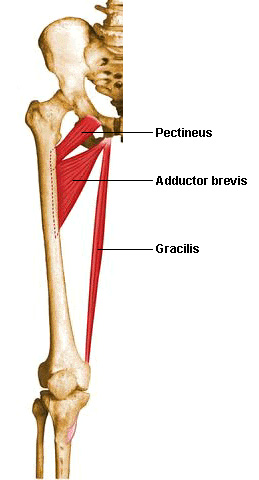
“Inter-gracile” tells you, if you’re in an anatomical mood, that the “thigh gap” is between the inner thigh muscles, or gracilis muscles. “Sub-pudent\dal” tells you that the thigh gap is at the top of the thighs, just below the cunt. 

thigh gaps“Sub-pubic” was another option that I considered instead of “sub-pudendal”. There are issues with the word “pudendal”, that I’ll post about later. But “pudendal” refers to the external genitalia, the lips of the cunt, while “pubic” includes the interior of the cunt as well.

So when we’ve said this thing we’re talking about is “inter-gracile” and “sub-pudendal”, we know it’s the area just above the handle-bars.


More about the inter-gracile sub-pudendal fossa

I should explain the name. I’ll start with “inter-gracile”. 

MT.AP.Muscles.GracilisThe gracilis muscles are thigh muscles: more slender and, well, graceful, than the adductor muscles, which give strength and tone to the thighs.

The gracilis muscle is on the inner thigh. It shapes the curves of the inner thigh. They also do most of the work in opening and closing the thighs, which is why (because the gracilis muscles are weaker than the adductor muscles) a movement like opening your thighs is nowhere near as strong as the movements involved in running, say, or stamping.

So “inter-gracile” simply means it’s between the gracile muscles.

I could have said “inter-crural”, which means “between the thighs”. But I I like that gap. If I can compliment it with a word like “gracile”, then I will.

Here’s another picture of the gracilis muscles doing their fine work at the top of the thighs. 

images-7

More to come.